

- Sale
- New
- Plants
- Seeds
- Plant search
-
Assortment
- Happy Customers
-
About
- Insights
Although most palms occur in warm climates, it is a misconception that palms only grow in tropical and subtropical regions. Most people do not realize that palm trees can grow not only in Spain or tropical islands but also in other colder countries around the world.
Although most palms can only tolerate cold down to about 5 °C, there are hundreds of palm species that can withstand a few degrees of frost.
Keep in mind that the palm must be hardened before it can withstand such cold weather. The palm tree needs at least three seasons to fully develop. It is important to know that the age of the palm tree also plays a key role in hardiness, as there is a huge difference between young and mature plants.
As the palms mature, they develop an extensive root system and harder trunks that are much stronger and therefore resistant to colder temperatures.
Here is a list of the 20 most popular palms that can withstand some stress. With some winter protection and utilizing your garden's microclimate, you can even grow them in zones 9 - 11.
All these palms are durable, easy to grow, and can adapt well to different soil conditions.
Click on the name in the list to view the palm

The Bismarck palm, scientific name Bismarckia nobilis, is native to Madagascar. It is not the hardiest palm on this list, but it is strong and can withstand strong winds and heat. The silvery-green fan-shaped leaves create a dramatically beautiful effect in any landscape.
Bismarckia nobilis is low-maintenance and easy to grow. This palm is hardy and can withstand cold temperatures down to -4 °C, making it perfect for USDA zones 9b-11.

The Blue Hesper Palm, also known as Brahea armata, is originally from Baja California and is found in drier and colder climates of South America. It is a drought-tolerant palm with a brownish trunk and striking silver-blue leaves. This palm is new to cultivation, making it expensive and potentially hard to find.
Unlike many other palms that prefer cold, dry winters, this species can even tolerate cold, wet winters. This slow-growing palm adapts to a wide range of soils and can withstand cold down to -4 °C. However, it has also been reported to survive -9 °C. Anything below -9 °C will cause leaf damage. Grows well in USDA zones 9b-11.

The Cabbage Palm, scientific name Sabal palmetto, is native to the extreme southern coast of North Carolina. It extends through Florida, the Caribbean, and the Gulf Coast.
This palm is very durable and tolerates a wide variety of soil and weather. It is fully adapted in zones 8 and 9 and can even be found in some parts of zone 7.
This slow-growing palm can tolerate both drought and cold down to -12 °C when mature enough. Although any temperature below -12 °C will cause leaf damage, the trunk of the hardened palm can even survive -18 °C. USDA Zones 8a-11 are perfect for this palm.

The Canary Island Date Palm, scientific name Phoenix canariensis, is originally from the Canary Islands and North Africa. It is easily recognizable by its large crown of leaves and trunk features with a crisscross pattern.
This slow-growing palm is highly adaptable to a wide range of soil conditions and can withstand cold down to -9 °C. With some extra winter protection, you can grow it in Zone 8a. Great for USDA zones 8b - 11.

The California Fan Palm, also known as Washingtonia filifera, is originally from North America. It is widely cultivated as an ornamental landscape tree in Arizona, Mexico, and California. It can tolerate significant cold in a dry climate, but is not as resilient to cold under wet conditions.
This palm can tolerate both drought and cold down to -9 / -7 °C when mature enough. It becomes much more cold-tolerant as it hardens off. Older specimens grow in Zone 7a and Zone 6b with some minimal winter protection. So you can definitely grow it in zones 8a-11.

The Chinese Fan Palm, also known as Livistona chinensis, is originally from China and southern Japan. This moderately growing palm is a cold-hardy palm that can tolerate both drought and cold between -7 / -4 °C when mature enough. Any temperature below -7 °C will cause leaf damage, and anything below -9 °C will cause complete defoliation.
Livistona chinensis is widely grown in Arizona, Texas, and California. It is perfect for landscaping in zones 9a-11. If you want to grow it in areas of zone 8b, you need to provide some shelter.
However, if you don't mind the loss of leaves, you can even grow this palm in zone 6 and 7 as a dying perennial. Each winter it will die back to the ground to regrow when the warm weather returns. How cool is that?

Dwarf Palmetto, also known as Sabal minor, is one of the small palm species native to northeastern Mexico and the southeastern and southern central United States.
It is a very cold-tolerant palm that can withstand temperatures near -18 °C. It is also known to survive short periods of -21 °C temperatures. It is perfect for landscaping in zones 7b-10a.

The European Fan Palm is also known as the Mediterranean Palm. This slow-growing palm is originally from North Africa and the Mediterranean region of Europe. This palm is very attractive, "bushy" evergreen, and extremely tough.
The European Fan Palm can tolerate cold down to -15 °C with defoliation at around -9 °C. It is also known to survive -16 °C without permanent damage, but I would not plant it anywhere with temperatures below -15 °C. It is perfect as an ornamental palm in zones 7b-11.

The Lady Palm, scientific name Rhapis excelsa, is a very popular palm for indoor and outdoor use due to its easy maintenance and cold hardiness. This palm is native to southeastern China and is a very slow-growing palm. It is a bushy evergreen plant that can tolerate low temperatures down to -9 °C. Great for ornamental use in zones 8b-11.

The Mexican fan palm, scientific name Washingtonia robusta, is originally from desert areas of Mexico. Like the California fan palm, it tolerates cold in a dry climate much better than cold in a wet climate.
The Mexican fan palm is a hardy palm that can tolerate cold down to -9 °C when mature, although it is known to survive -18 °C if very well wrapped.
This moderately growing palm is perfect for ornamental use in zones 8b-11. If you try to grow the Mexican fan palm outside its normal zone 8b, make sure it is planted in full sun and has good drainage.

The Mazari palm, scientific name Nannorrhops ritchiana, is originally from Afghanistan and Pakistan. It is a rare palm that has been gaining popularity lately due to its striking appearance and durability. Although the Mazari palm is hard to find, it is almost as cold-hardy as the Needle Palm.
It easily adapts to different soils, can withstand drought and cold down to -12 °C. In the cold deserts of the Middle East, the Mazari Palm is known to survive temperatures below -18 °C.
However, it seems to tolerate the cold much better in dry conditions than in wet conditions. This extremely slow-growing palm is great for zones 8a - 11.

The needle palm, scientific name Rhapidophyllum hystrix, is originally found in the coastal plain of the southeastern United States. It is the MOST cold-hardy palm in the world in climates with warm to hot summers. You can easily find pictures of needle palms covered in snow.
The needle palm can easily withstand cold down to -21 °C without any protection. The lowest temperature known to be survived is -31 °C in Knoxville, Tennessee in 1985. Believe it or not, this palm can survive the cold winters.
A needle palm that has been in the ground for 3 years should be able to withstand the conditions of zone 6a without any damage. It would survive in zone 5b with some leaf burn. This slow-growing palm is perfect for zones 5b-11.

The Paurotis palm, scientific name Acoelorrhaphe wrightii, is originally found in southern Florida. This slow-growing palm is very durable and adapts to various soil types. It can withstand low temperatures down to -4 °C, but it is also known to endure -7 °C. Great for zones 9b-11.

The Pindo Palm, also known as Jelly Palm, is originally from Brazil, Argentina, and Uruguay. It is the most cold-hardy palm with feathery leaves currently available on the market.
This palm is easy to grow but does require some maintenance to look nice. It is a hardy palm that can withstand temperatures down to -15 °C, with leaf damage occurring around -9 °C. It can survive short periods at -18 °C, but all leaves will be lost.
This very slow-growing palm is perfect for zones 7b-11. Any area outside zone 7b requires winter protection.
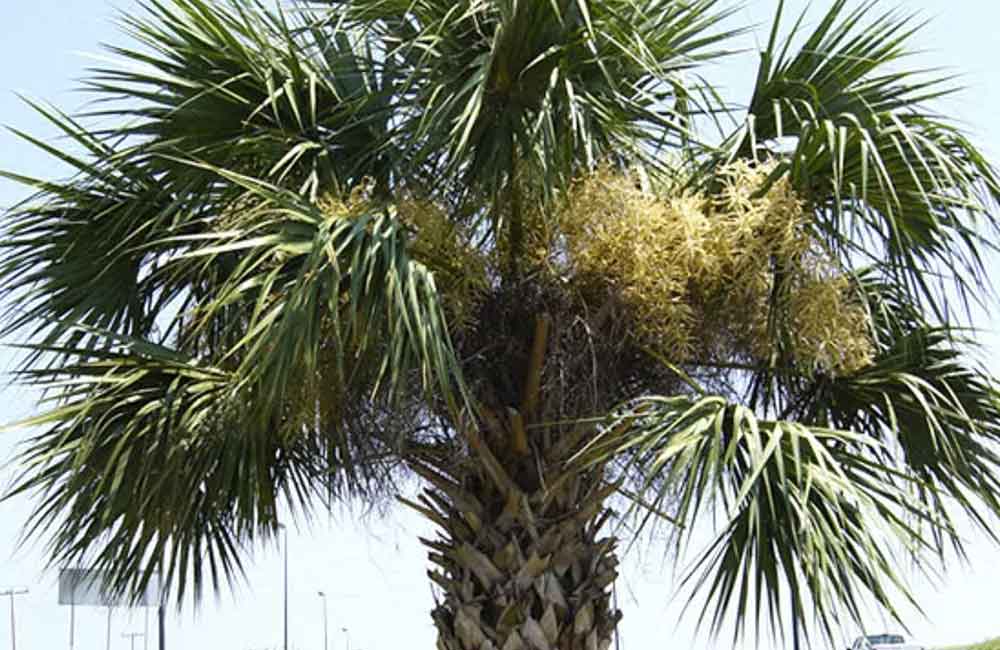
The Texas Sabal Palm, scientific name Sabal mexicana or Sabal texana, is native to the far southern Texas and northern Mexico through Central America. It resembles the popular Sabal palmetto, except that it has larger leaves and a more massive trunk.
Like the Sabal palmetto, it can withstand freezing temperatures down to -12 °C, but it is also known to survive -17 °C if it is sufficiently mature. I believe that temperatures below -15 °C will destroy most leaf tissue.
This palm can be used without any protection in zones 8a -11 and in zone 7b with winter protection.

The Saw Palmetto Palm is also known as Sabal Palm. It is native to Florida and grows throughout the southeastern United States. The Saw Palmetto Palm is a very cold-hardy palm that can withstand cold down to -18 °C. This slow-growing palm is perfect for zones 7a-11.

The Sago Palm, scientific name Cycas revoluta, is not a true palm but a cycad. This slow-growing palm is very hardy and can withstand cold down to -9 °C, but it is also known to survive 12 °C without permanent damage. Great for zones 8b - 11.

The Wild Date Palm, scientific name Phoenix sylvestris, is one of the most popular palm trees in the world used in luxury homes, hotels, and golf courses. It is slow-growing, widely adaptable, easy to maintain, and can withstand cold down to -9 °C. Great for zones 8b - 11.

The true date palm, scientific name Phoenix dactylifera, is one of the most recognizable palm trees in the world due to its tasty 'dates' of fruit. This slow-growing palm is drought-tolerant, adapts to a wide range of soils, and is resistant to cold down to -9 °C. Great for zones 8b - 11.

The Chinese fan palm, scientific name Trachycarpus Fortunei, originally comes from the northern parts of India, Myanmar (Burma), Thailand, Nepal, and southern China. It can grow in mountainous terrain above 6650 ft in elevation.
It is therefore accustomed to cold temperatures below freezing and regular heavy snowfall. Needle palms and Dwarf Palmettos need hot summers to recover and gain strength for the next winter. The Chinese Fan Palm prefers cooler summers.
The Trachycarpus fortunei is a very hardy palm that can withstand cold down to -15 °C. However, the lowest temperatures it can survive without any protection is about -23 °C. It will suffer leaf damage at around -12 °C. This slow-growing palm is perfect for zones 7b-11.
Have you ever wondered why some gardeners in northern regions can successfully grow palms while others living in the same location cannot? There are several factors that can play a key role in the survival of the palm.
By using some simple cold protection techniques, you can shift the hardiness zone of the palm by one or even one and a half USDA zones! With more advanced measures, it is possible to shift it by two full zones.
You can start winter protection for the palm in late autumn or early winter after it has noticeably become cold. A little cold weather is good for your palm, as it triggers the dormancy process and makes the palm more cold-hardy.
So don't start too early. The goal is to protect the leaves, stems, and the most important part of the palm, the bud that is the heart of the palm tree. Here are a few simple things you can do:
As you can see, there are many different types of palm trees that can grow in subtropical and temperate climates. By using only the palms from the list above, you can create a beautiful tropical garden that will attract the attention of all your neighbors. And with some use of the microclimate on your property and protection from the cold, the possibilities are endless.
Keep in mind that palms are individuals, and thus even within the same species or variety there can be some variation in cold tolerance.
View the available palm seedsComments will be approved before showing up.

The Ensete ventricosum ‘Maurelii’ is a fast grower with a tropical look that prefers a warm, bright, and sheltered spot. In this blog, you’ll learn how to care for this red banana plant, what to expect each season, and how to keep it healthy from a young plant to a large eye-catcher.

The Musa velutina, also known as the pink banana plant, is a tropical plant that stands out due to its unique appearance and rapid growth with proper care. In this blog, you will learn how to keep it healthy with the right location, watering, potting soil, and nutrition. Additionally, you will discover what to expect throughout the year, from active growth in spring and summer to a quieter phase in autumn and winter. Repotting, leaf care, winter care, and the development from a young plant to a larger Musa velutina are also covered.

Succulents are hardy, stylish, and surprisingly easy – as long as you care for them properly. In this blog, you’ll discover the 10 most frequently asked questions about succulents, from watering and light to feeding and winter dormancy. You’ll learn why less is more, how to prevent overwatering, and which succulents are perfect for both beginners and collectors. Ideal for anyone who wants to keep their succulent healthy without stress or guesswork.


De sterck pascal
April 03, 2021
Bedankt