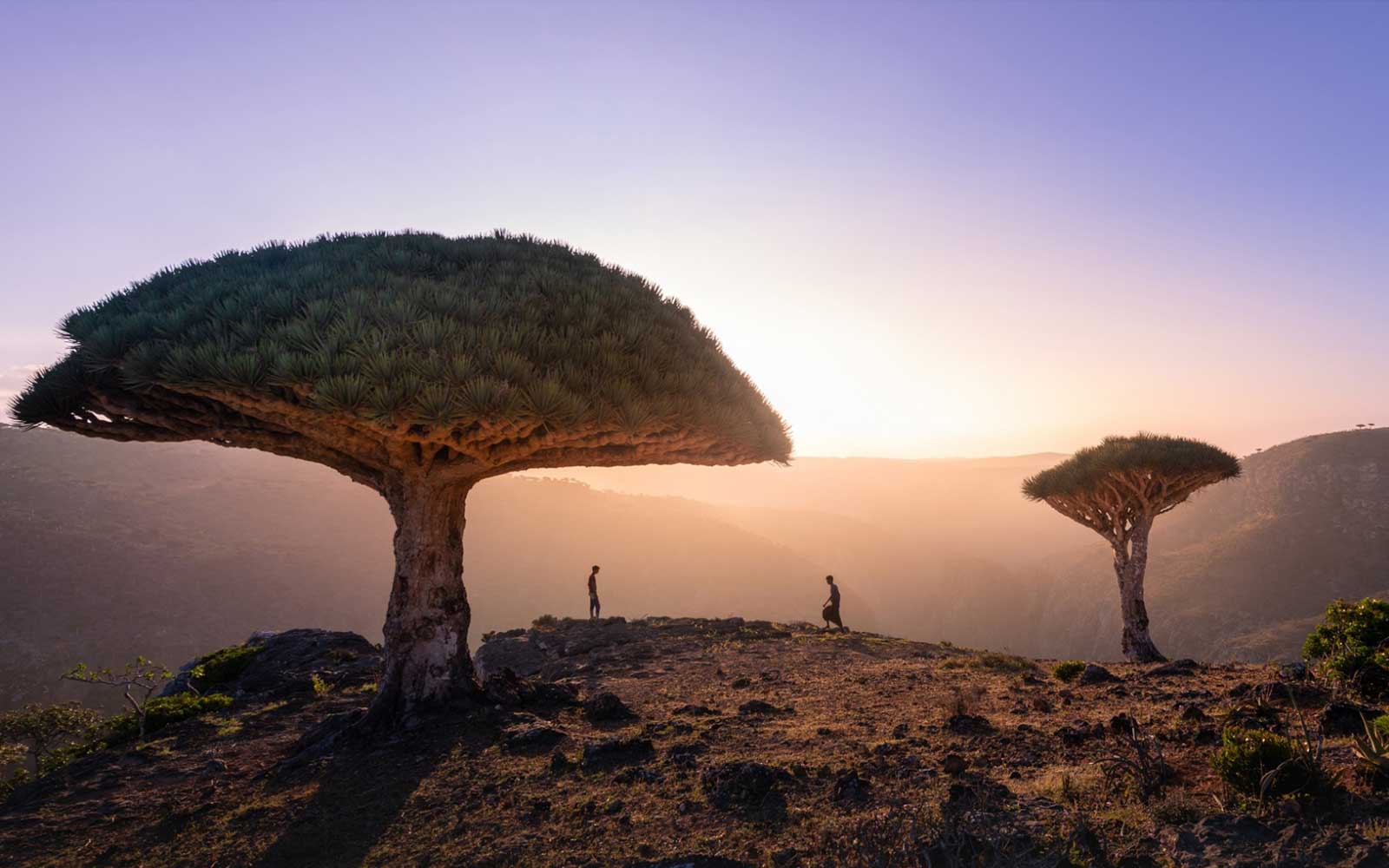
Much has been written about dragon blood trees, as well as about palms, Canary pines, garoés, orchillas, and other exotics. Even in antiquity, many stories and legends circulated about the many magical properties of the Dragon Blood Tree. For example, we mention: the Hesperides and the gardens of Atlantis.
It is noteworthy that GAROés were sacred, magical trees from the island of El Hierro, one of the Canary Islands. The Bimbaches: the original inhabitants of El Hierro revered this tree because it was capable of collecting and filtering rainwater, providing the people with the much-needed drinking water. Unfortunately, during the conquest by the Spaniards in the 14th and 15th centuries, the tree was lost, but it remains a symbol of El Hierro.
Orchillas are lichens from which red dye was extracted. Explorers, natural scientists, and botanists, as well as historians, took seeds or entire saplings back to their own countries to cultivate them.
The Dutch physician and botanist Carel Clusius published the first scientific description of the Dragon Blood Tree in 1576, which he knew from a hillside behind the Gracia monastery near Lisbon. In his work, he included a copy of a very detailed watercolor of the Draco by Pieter van de Borcht. Clusius was the founder of the Botanical Garden in Leiden, the first botanical garden in Europe, where he cultivated his Dragon Blood saplings.
Since Linnaeus, the "father" of registration and modern biological systematics, the species has been described 2,200 times and given a name, but today 60 species are recognized. The most popular species, the Dragon Blood Tree from Macaronesia (Cape Verde), which typifies the species, has also not escaped the reduction of species names and is now called “Dracaena Draco.” The six best-known and popular species are represented in tropical and subtropical mountainous Africa.